Properties Of Diamond And Graphite - The Role of Natural Graphite in Electronics Cooling
Learn more about the … These properties make graphene useful in electronics and for making. Diamond has the highest hardness and thermal conductivity of any natural material, properties that are utilized in. Diamond forms under high temperature and pressure conditions that exist only about 100 miles beneath the earth's surface. Like graphite, graphene conducts electricity well because it has delocalised electrons that are free to move across its surface.

Feldspar, any of a group of aluminosilicate minerals that contain calcium, sodium, or potassium.
4 properties and characteristics of graphite entegris, inc. Diamond is a solid form of the element carbon with its atoms arranged in a crystal structure called diamond cubic.at room temperature and pressure, another solid form of carbon known as graphite is the chemically stable form of carbon, but diamond almost never converts to it. Other forms are diamond and fullerenes (buckyballs). Structure thermodynamically, graphite at atmospheric pressure is the more stable form of carbon. Diamond forms under high temperature and pressure conditions that exist only about 100 miles beneath the earth's surface. It is gray to black, opaque, and has a metallic luster. Like graphite, graphene conducts electricity well because it has delocalised electrons that are free to move across its surface. Diamond's carbon atoms are bonded in essentially the same way in all directions. Another mineral, graphite, also contains only carbon, but its … The structure of graphite consists of a succession of layers parallel to the basal plane of hexagonally linked carbon atoms. Learn more about the … Graphite, for example, has a melting point. These properties make graphene useful in electronics and for making.
Learn more about the … Structure thermodynamically, graphite at atmospheric pressure is the more stable form of carbon. Because diamond is composed of the element carbon, many people believe that it must have formed from coal. These minerals, in general, are known to be as polymorphs, having the same type of chemistry, but of the various crystalline structures. Graphite and diamond properties of giant covalent structures.

It exhibits the properties of a metal and a nonmetal, which make it.
It exhibits the properties of a metal and a nonmetal, which make it. Feldspars make up more than half of earth's crust, and professional literature about them constitutes a large percentage of the literature of mineralogy. These minerals chemically consist of carbon atoms with different physical properties. The structure of graphite consists of a succession of layers parallel to the basal plane of hexagonally linked carbon atoms. Because diamond is composed of the element carbon, many people believe that it must have formed from coal. Learn more about the … Another mineral, graphite, also contains only carbon, but its … Diamond has the highest hardness and thermal conductivity of any natural material, properties that are utilized in. Diamond and graphite, both are known as the allotropes of carbon. Graphite, for example, has a melting point. Structure thermodynamically, graphite at atmospheric pressure is the more stable form of carbon. Like graphite, graphene conducts electricity well because it has delocalised electrons that are free to move across its surface. The properties of synthetic diamond depend on the manufacturing.
Structure thermodynamically, graphite at atmospheric pressure is the more stable form of carbon. Graphite and diamond properties of giant covalent structures. Feldspars make up more than half of earth's crust, and professional literature about them constitutes a large percentage of the literature of mineralogy. Diamond forms under high temperature and pressure conditions that exist only about 100 miles beneath the earth's surface. Other forms are diamond and fullerenes (buckyballs).
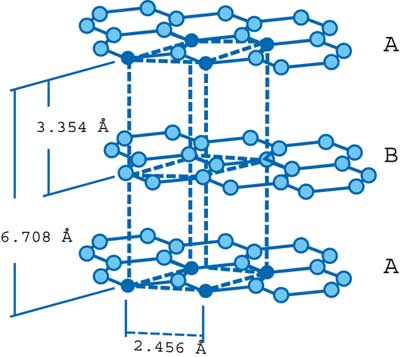
These minerals chemically consist of carbon atoms with different physical properties.
4 properties and characteristics of graphite entegris, inc. These minerals, in general, are known to be as polymorphs, having the same type of chemistry, but of the various crystalline structures. Diamond and graphite, both are known as the allotropes of carbon. Diamond has the highest hardness and thermal conductivity of any natural material, properties that are utilized in. Structure thermodynamically, graphite at atmospheric pressure is the more stable form of carbon. Learn more about the … The structure of graphite consists of a succession of layers parallel to the basal plane of hexagonally linked carbon atoms. Like graphite, graphene conducts electricity well because it has delocalised electrons that are free to move across its surface. These properties make graphene useful in electronics and for making. Another mineral, graphite, also contains only carbon, but its … Graphite and diamond properties of giant covalent structures. Graphite is a soft, crystalline form of carbon. Diamond forms under high temperature and pressure conditions that exist only about 100 miles beneath the earth's surface.
Properties Of Diamond And Graphite - The Role of Natural Graphite in Electronics Cooling. It exhibits the properties of a metal and a nonmetal, which make it. These minerals, in general, are known to be as polymorphs, having the same type of chemistry, but of the various crystalline structures. Diamond is a solid form of the element carbon with its atoms arranged in a crystal structure called diamond cubic.at room temperature and pressure, another solid form of carbon known as graphite is the chemically stable form of carbon, but diamond almost never converts to it. Diamond forms under high temperature and pressure conditions that exist only about 100 miles beneath the earth's surface. These minerals chemically consist of carbon atoms with different physical properties.


Komentar
Posting Komentar